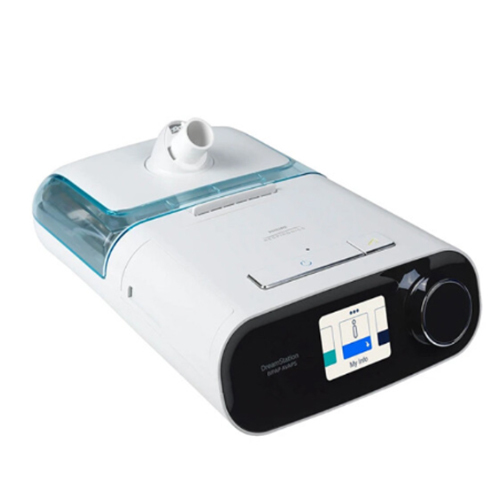
About Philips DreamStation Bipap AVAPS 25
Advanced Therapy with AVAPS AlgorithmPhilips DreamStation BiPAP AVAPS 25 incorporates the innovative AVAPS (Average Volume Assured Pressure Support) algorithm, automatically adjusting pressure support to ensure the target tidal volume is achieved for every breath. This ensures reliable therapy and adapts to the changing needs of patients with sleep apnea, COPD, or respiratory insufficiency, delivering optimal comfort and effective ventilation.
Silent Operation and User ComfortThe device operates at less than 30 dBA, significantly reducing noise for a restful night's sleep. Its compact construction, optional heated humidifier, and easy-to-read full-color LCD display contribute to enhanced comfort and usability for both individuals and caregivers.
Comprehensive Data Management and AlarmsEquipped with Bluetooth and SD card compatibility, the DreamStation allows for seamless data monitoring and transfer. Detailed compliance and event summaries, along with audible and visual alarms, ensure safe and effective therapy by alerting users to issues such as disconnections, apneas, or abnormal pressure changes.
FAQ's of Philips DreamStation Bipap AVAPS 25:
Q: How does the AVAPS algorithm in the DreamStation BiPAP AVAPS 25 benefit patients?
A: The AVAPS (Average Volume Assured Pressure Support) algorithm automatically adjusts the pressure support to help reach the targeted tidal volume for each patient. This results in more consistent and comfortable respiratory support tailored to individual needs, enhancing therapy effectiveness for patients with conditions like COPD or sleep apnea.
Q: What is the process for setting up and using the DreamStation BiPAP AVAPS 25 at home?
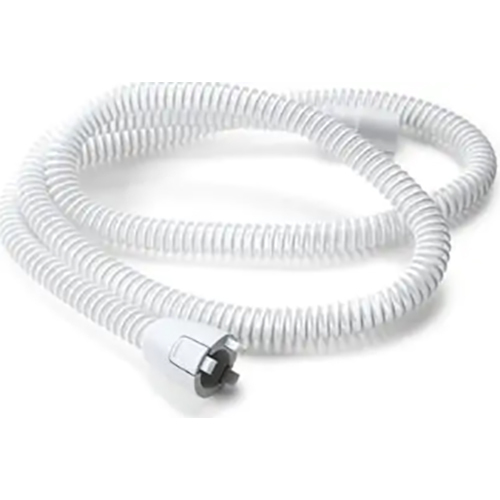
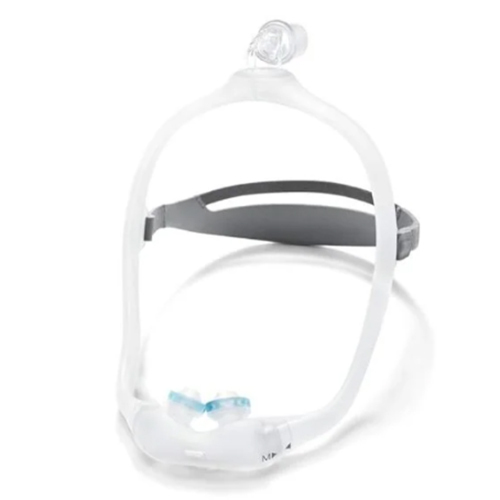
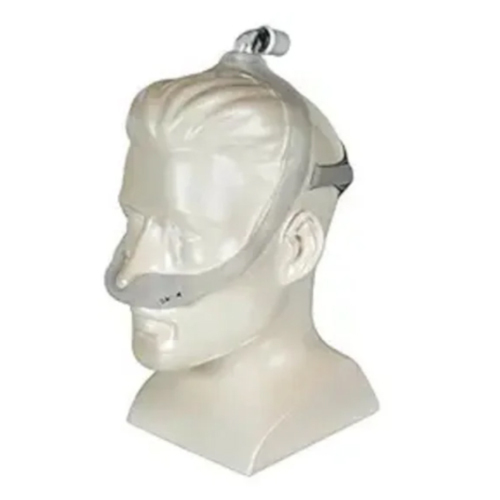
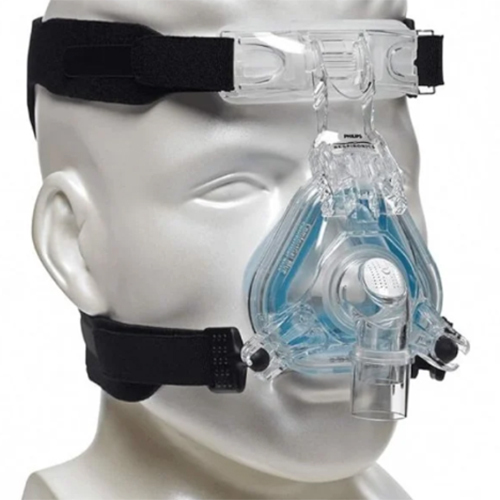
A: Setting up the DreamStation involves connecting the supplied tubing, filter, and power adapter, attaching the mask, and configuring prescribed settings using the full-color digital interface. The device also supports optional heated humidification and allows adjustment of ramp time and pressure ranges, ensuring a comfortable and effective home therapy experience.
Q: When should the backup breath rate be adjusted on the device?
A: The backup breath rate should be set or adjusted based on your physician's recommendation, especially for patients who may require guaranteed ventilation support if spontaneous breaths decrease. This feature ensures patient safety by providing a set minimum number of breaths per minute according to individual clinical needs.
Q: Where can compliance data from the DreamStation be accessed or reviewed?
A: Compliance and event summary data are stored onboard for up to 3 months and can be transferred via Bluetooth or SD card to healthcare providers. The device's user-friendly interface also allows patients or caregivers to review daily therapy reports directly on the LCD display.
Q: What modes of ventilation are available on the DreamStation BiPAP AVAPS 25?
A: The device offers multiple operating modes: CPAP mode for fixed positive airway pressure, Spontaneous/Timed (S/T) mode for user and machine-triggered breaths, and AVAPS mode for automatically adjusting support to maintain the target tidal volume. This versatility supports a broad range of respiratory conditions.
Q: How does the alarm system enhance safety during therapy?
A: The built-in alarm system delivers both audible and visual alerts for key events such as tubing disconnects, apnea episodes, or abnormal pressure levels. This prompt notification ensures timely interventions, contributing to the safety and reliability of therapy, whether used at home or in clinical settings.
Q: What are the main advantages of using the Philips DreamStation BiPAP AVAPS 25 for long-term respiratory care?
A: Major benefits include automated pressure adjustments for consistent ventilation, silent operation, robust alarm and data reporting systems, a broad pressure range suitable for diverse needs, and user-friendly features such as adjustable humidification and a compact build, making it suitable for both hospital and home use.


 Send Inquiry
 Mon-Sat 10.00 AM to 6.30 PM
 Call Us:-
08071791404
Call Us:-
08071791404





 Send Inquiry
 Send Inquiry
 Send SMS


 English
 Spanish
 French
 German
 Italian
 Chinese (Simplified)
 Japanese
 Korean
 Arabic
 Portuguese